3rd President of Malawi
Bingu wa Mutharika
Bingu wa Mutharika, Malawi's third President (2004–2012): life, career, the fertiliser subsidy, debt relief and the public debt during his presidency.
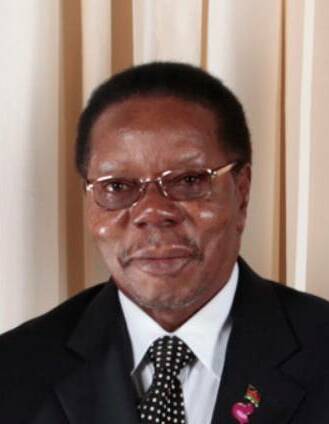
Biography
Bingu wa Mutharika was the 3rd President from 24 May 2004 to 5 April 2012, for the Democratic Progressive Party. The Vice Presidents were Cassim Chilumpha (2004–2009) and Joyce Banda (2009–2012). Elected for the UDF in 2004; founded the DPP in 2005.1
He was born on 24 February 1934 in Thyolo. He studied at University of Delhi, California Miramar University, Delhi School of Economics and Dedza Secondary School. Before the presidency he worked as an economist. He also served as Chairperson of the African Union (2010–2011).
He won the 2004 election with 35.97% of the vote and won the 2009 election with 65.45% of the vote.2
During the presidency, public debt went from 84.7% of GDP (end-2003) to 20% (end-2011).3
He died on 5 April 2012 in Lilongwe.
Public debt during the presidency
- Debt to GDP when taking office
- 84.7% (end-2003)
- When leaving office
- 20% (end-2011)
- Change
- -64.7 points of GDP
- In US dollars
- US$3.96 billion → US$2.33 billion
Measured the same way for every president: debt as a share of GDP at the year-end nearest each handover, or the Ministry of Finance's figure for the handover itself where one exists. Compare every president · Live national debt clock
More about Bingu wa Mutharika
Bingu wa Mutharika was Malawi’s third President, from 2004 until his death in office in 2012.
Born in Thyolo District, he trained as an economist and spent much of his career in international organisations, including the United Nations and the World Bank, and as Secretary-General of the Common Market for Eastern and Southern Africa (COMESA) in the 1990s.
He was elected President in 2004 as the United Democratic Front’s candidate, then broke with the party and founded the Democratic Progressive Party in 2005. His Farm Input Subsidy Programme, which gave smallholder farmers cheap fertiliser and seed, was followed by several years of strong maize harvests.
In 2006 Malawi reached the completion point of the Heavily Indebted Poor Countries (HIPC) initiative, and most of its foreign debt was cancelled. That is why public debt as a share of the economy fell so far during his presidency.
He was re-elected in 2009. His second term saw shortages of fuel and foreign currency, strained relations with donors and the deadly protests of July 2011. He died of a heart attack on 5 April 2012, and Vice President Joyce Banda succeeded him under the Constitution.
References
- Office of the President and Cabinet, Malawi
- Malawi Electoral Commission: presidential election results
- Ministry of Finance, Malawi: public debt reports (with the IMF Global Debt Database for years before them)
Written by Ask Malawi from the public records cited above; no text is copied from other sites. Updated 10 October 2026. Spotted a mistake? Tell us.